
Having owned a lathe and mill for over 5 years I have come to the conclusion that Brushed motors have too many drawbacks:
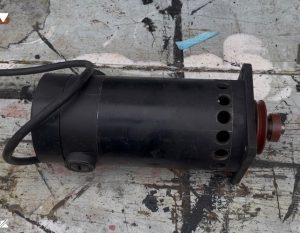
Maintenance and cost of replacement brushes
Wear on the commutator causing degraded performance from ovaling and depression which is difficult to dress.
Black carbon dust deposits
At high speed and high torque brushes arc.
No magnet brake
poor torque overall
poor speed control under variable loading conditions
consumes more power
noisy
excessive heat,,, when in constant use
When changing to reverse and starting the motor too quickly the main circuit breaker would trip, this remains the same on the BLDC motor, however worth mentioning this drawback.
Without proper gauged circuit breakers protecting the Control PCB and motor its easy to blow the power triacs and diodes on the board, this can be costly.
Brushless Motor and control unit
I took the plunge and finally purchased a 220 Vac 2.2 Kw brush less motor and control unit from AliExpress. This apparently is designed for an industrial sowing machine. I also knew this was not going to be an easy swap/ upgrade. In addition a large learning curve. I’ve now created a comprehensive report of my experiences.

Lathe Extra Part Requirements
Backing Plate – to interface the new motor to the existing arrangement, it has a different footprint.
New pulley If the replacement motor has a spindle with a larger size a new pulley has to be manufactured. This process requires Collet chuck, internal mandrel, 5 mm keyway cutter.
Stepped Nut and locknut, A special nut with a reduced step is required to centralise the pulley onto the spindle in addition to a lock nut.
Remote cableform to extend the speed pot and FWD/REV push switch. The existing Pot is unsuitable for a lathe as its not precise, I have found a 5 turn most suitable.
Controller Programming; The controller comes with factory settings. This requires re-programming to e.g. enable the brake, start direction (which is default clockwise on the factory set controller) and needs to be anti-clockwise on a lathe. A full list of the adjustable parameters is available.
Conclusion – I’ve now been running this for nearly a year now, very satisfied.
The future – Lathe Control Monitoring Unit , LCMU – I am developing a separate control unit that is logic programmed to improve the control of this unit. The controller motor is designed for a sewing machine so it only has basic functions.
A few input controls
Encoder speed control so doesn’t need to be wound down to zero before switching on which can be forgotten and trips the circuit breaker…
Pushbutton and Foot switch – (Stop).
Fwd/ reverse switch with logical control
Time out switch off contactor if not used for 2 mins.
6 in No memory speeds locked in by simply holding the button > 3 secs
buzzer to announce when a button is pressed.
Mini Mill upgrade.
This was a large project. In brief
Removal of the motor and all the existing electrical/ electronic parts.
Removal of the gearbox and all the internals associated with it, blanking lever hole.
Belt pulleys required matching to the New motor and the spindle of the mill, spacers were required, boring out and keyways cut.
3 in No. Sandwich plates upper lower and motor.
12 in No specialist Spacers for the plates
Cut a couple of flats into the lower spindle to lock the spindle when changing chucks and milling cutters
Back plate required to mount the controller.
Top cap cover to guard the rotating nut.